Lindy Hop is an improvisational partner dance that emerged in the late 1920s alongside swing jazz music within the African American communities of Harlem, New York City and is considered “America’s greatest folk dance.” Lindy Hop is the reflection of creative expression and resiliency in the African American communities. It is a dance based on a combination 6 and 8-count rhythms with roots in traditional African dances and movements.
The Savoy Ballroom, located in Harlem, New York City, which opened in 1926, was one of the first integrated ballrooms in the United States, welcoming dancers of all races to share the floor equally in a period when racial segregation existed.
This dance was born naturally as jazz music evolved and big band swing became more popular. It was not formally taught and instead people learned by watching others dance and copying what they saw. At its core, the dance is about connection, rhythm, improv, and play.
At the Savoy, it was common to see same-gender partnerships in during performances. Notably, dancers like Al Minns and Leon James, members of the Whitey’s Lindy Hoppers, were known for their same-gender dance partnership, showcasing the dance’s flexibility and the community’s openness to diverse expressions of identity.
As music evolved, so did the dance. Lindy Hop gave rise to dance styles like east coast swing, rock n’ roll, jive, boogie woogie, and west coast swing.
Today, Lindy Hop continues to thrive worldwide, celebrated for its joyful spirit, rich history, and the inclusive community it fosters.
What is Lindy Hop?

The Charleston is a lively jazz dance that first gained popularity in African American communities in the early 1920s, primarily danced to ragtime and hot jazz. It is often considered the grandfather of Lindy Hop.
It takes its name from its birthplace of Charleston, South Carolina, which was a main port in the transatlantic slave trade. Enslaved Africans carried their traditions of rhythm, music, and dance, which blended and evolved within Charleston’s Black communities into new forms of expression. By the early 20th century, solo Charleston were already being performed locally.
The dance gained national recognition in 1923 through the Broadway show Runnin’ Wild, which featured Black American dancers doing the Charleston to James P. Johnson’s hit song, “The Charleston.” By the mid-1920s, it became the dance craze of the decade, rapidly spreading across nightclubs and social halls. White flapper culture, in particular, embraced the Charleston as a symbol of rebellion and freedom.
The Charleston was initially a solo dance, but partnered forms of Charleston began to emerge in the 1930s and 40s. It provided many of the shapes and rhythms that would become part of Lindy Hop; as dancers began breaking away of the closed Charleston position and experimenting with open connection and improvisation, a new dance began to emerge, the Lindy Hop!.
Something we’d like to acknowledge is that there is little documentation and representation of the Black American dancers who pioneered and shaped this dance style. Often times, people associate the Charleston with white Flapper Girls of the 1920s, but this popular image tells only part of the story. The dance has deep roots in Black American communities and was being danced and developed by Black dancers before and alongside its rise to popularity in mainstream American culture. Recognizing these roots is an important part of understanding the history of Charleston and the dances that followed.
What is Charleston?
What is Balboa?
While Lindy Hop was developing on the East Coast alongside big band swing, different styles of swing dance were emerging in Southern California in the 1930s.
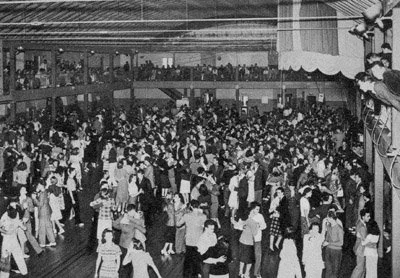
Balboa-Shuffle, gained popularity in the early 1930s. It was primarily danced at the Rendezvous Ballroom in the Balboa Peninsula, an hour south of Los Angeles. The ballroom floor would be packed with teenagers and young adults. Due to limited space, this dance consisted of smaller shuffling steps that stayed in place, with rotations and inching movements. Typically, dancers were not able to breakaway and would remain in close embrace. This dance style has a greater emphasis on connection and partnership, rather than being flashy and performative. However, many dancers still expressed their creativity through playful footwork variations.
On the East Coast, radio stations would air big band swing music late at night, targeted towards adult audiences. Meanwhile, teenagers on the opposite side of the country in Los Angeles tuned into these radio stations earlier in the evening with excitement and an eagerness to dance to this music, unaware of Lindy Hop. In the mid 1930s, most adolescents had a background in ballroom dance classes such as waltz, box step, and rumba, and drew inspiration from films and local dances to create their own style that they referred to as “Swing”. This dance was made up of a quick-quick-slow basic and was known for its playful and energetic nature and moves.
As dancers intermingled, “Swing” dancers and Balboa Shuffle dancers began mixing elements from both styles which led to Bal-Swing; a form of balboa that maintained close embrace, but could breakaway to open position adding turns, spins, and other expressive moves. Balboa-Shuffle is now known as Pure Balboa, and Balboa-Swing as Balboa. Both dances are cherished and known for their elegance, connection, and iconic moves.
What is Blues?
Blues dancing is a social dance form that developed alongside blues music in the United States. It emphasizes musicality, improvisation, and partner connection, allowing dancers to interpret the rhythm and emotion of the music.
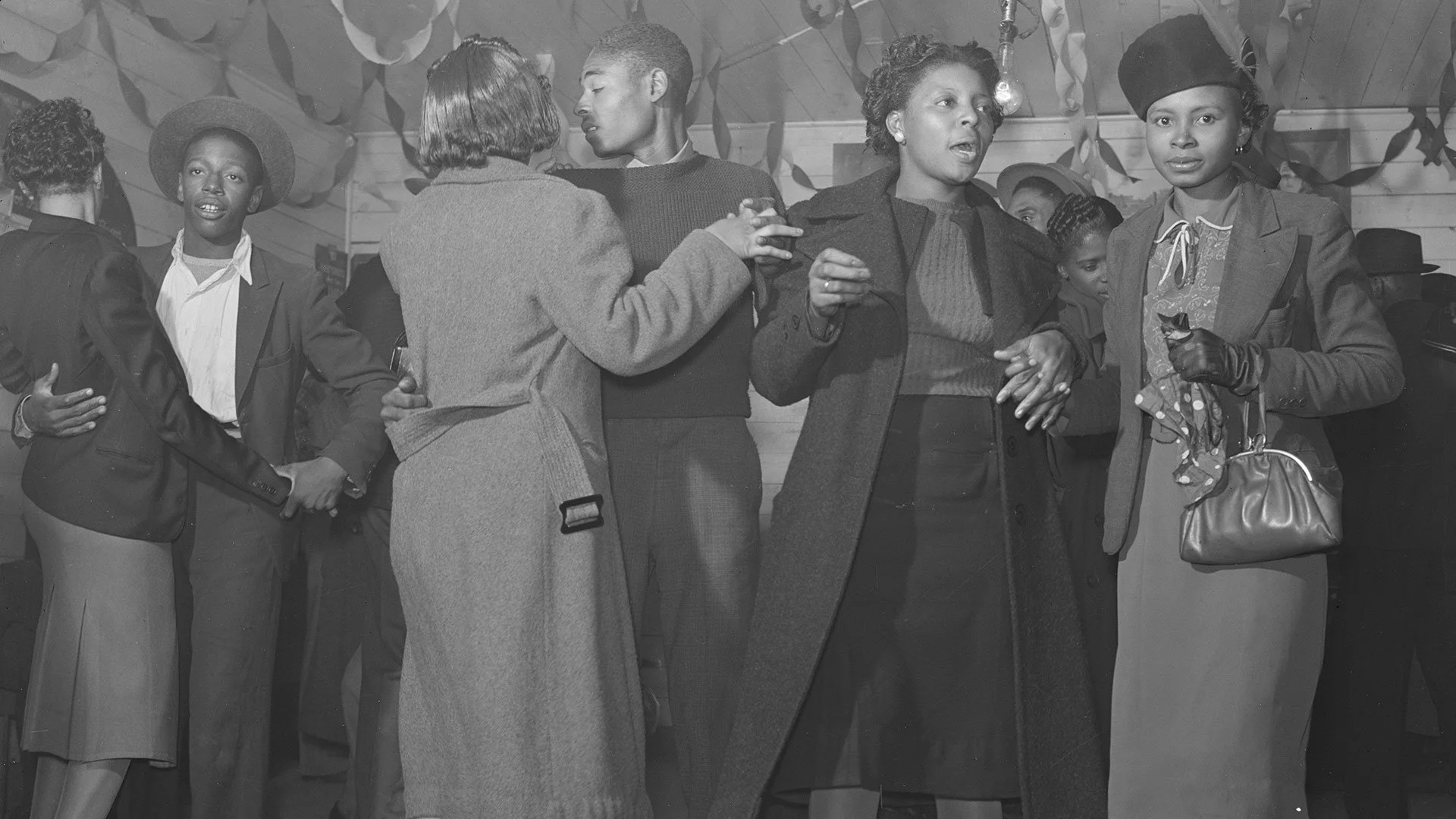
Blues is not just a deeply rich and expressive music and dance, but also an emotionally resonating piece of history that grew out of the Deep South Black communities, especially the Mississippi Delta, with heartfelt connection, emotional tension and release, and deep musical connection and creative expression. Blues dancing is soulful, emotionally healing, and deep creative expression in response to hardship and adversity in life.
Blues dance developed organically in African American communities across the U.S., with each region, venue, and social context shaping how people moved to the music. Improvisation and personal expression were central, so even within one community, dancers created unique interpretations. Over time, these variations became distinct styles, each reflecting the creativity, culture, and history of the dancers.
We sing the blues because our hearts have been hurt. Blues is when you’re hungry and you don’t have money to buy food. Or you can’t pay your rent at the end of the month.” ~ Alberta Hunter